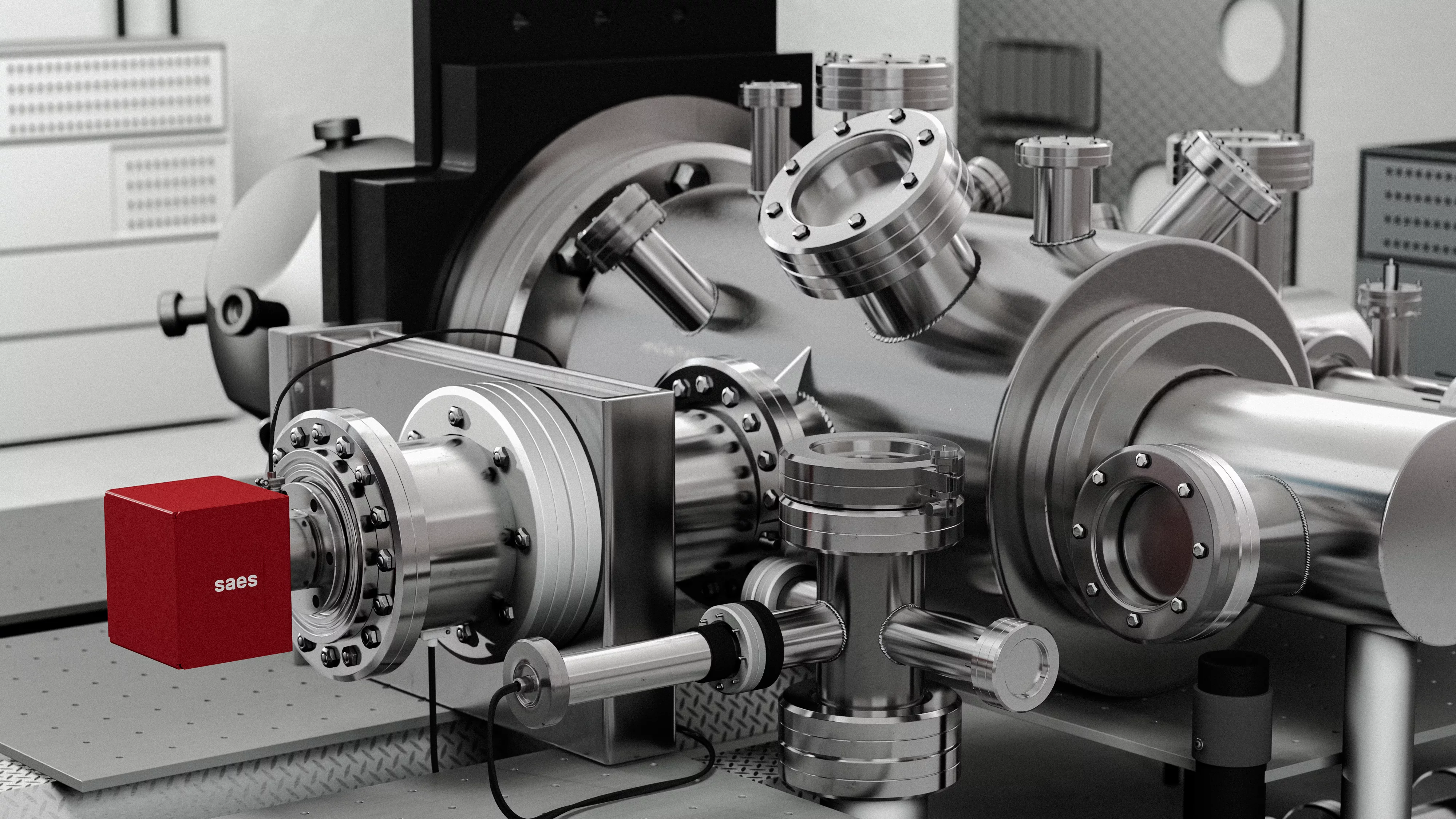
SAES is an industrial group with a long-standing tradition in the research, development and production of advanced functional materials. In line with its strong focus on innovation, the company has launched an experimental project with AIRIC to assess the use of artificial intelligence and machine learning techniques applied to the analysis of its historical data assets. The company holds a vast and heterogeneous set of experimental data, which it aims to leverage as a valuable resource to accelerate research processes. The challenge lies in transforming this information into actionable knowledge and exploiting AI and Machine Learning to identify patterns and correlations that can support Material Discovery activities. The project aims to evaluate the applicability and effectiveness of predictive models to support R&D in the Material Discovery process, with the goal of reducing experimentation time and costs while improving the efficiency of identifying new high-performance alloys and materials. The project was divided into two phases and focused on getter materials, metal alloys used in vacuum technology, in the development of which SAES is a world leader.

Context Analysis and Data Collection
In this phase, the available data sources have been identified, and the most relevant ones have been selected. The learning problems to be addressed were defined, historical data collected and cleaned, and exploratory analyses have been carried out to identify patterns, anomalies, and correlations, as well as to assess the quality and quantity of information with respect to the project’s objectives.
Deliverables:
- Map of data sources.
- Cleaned datasets.
- Preliminary technical report describing data cleaning and parsing activities, along with the results of the exploratory analysis.
Model Development, Training, and Validation
Based on the collected and cleaned data, machine learning models were designed and trained to predict the performance of new alloys given their composition and operating conditions. Model validation was carried out both quantitatively and qualitatively, through comparison with SAES experts, measuring the accuracy of the predictions.
Deliverables:
- Code for implementation, training, testing, and use of the models.
- Final technical report describing the problem, the developed models, the results obtained, and possible future improvements.
The project has shown that the company’s historical data contains valuable information that can be exploited through predictive models. The developed models are capable to simulate absorption performance for alloys with different composition or subjected to different activation conditions. This approach, if applied to a suitable set of homogeneous alloys in terms of composition, activation temperature and morphological characteristics, makes it possible to drastically reduce the number of experiments by focusing testing on the most promising samples, thereby cutting research time and costs.

Co-Director
AIRIC
Nicola
Gatti

Project Manager | Senior AI Research Engineer
AIRIC
Tommaso
Bianchi

AI Research Scientist
AIRIC
Piergiuseppe
Pezzoli

AI Research Scientist
AIRIC
Tomaso
Castellani

Technology Scouting Responsible
SAES
Corrado
Carretti
EX Consultant
SAES
Claudio
Boffito
Research Division
SAES
Research
Division
Vacuum System Division
SAES
Vacuum
System Division
Industrial Division
SAES
Industrial
Division
Avezzano Production Unit
SAES
Avezzano
Production Unit